Customer
Global Lime Producer
Industry
Manufacturing / Lime & Calcium Products
Salesforce Solution
Platform Integration
ForeFront Expertise

The Overview
About the Customer
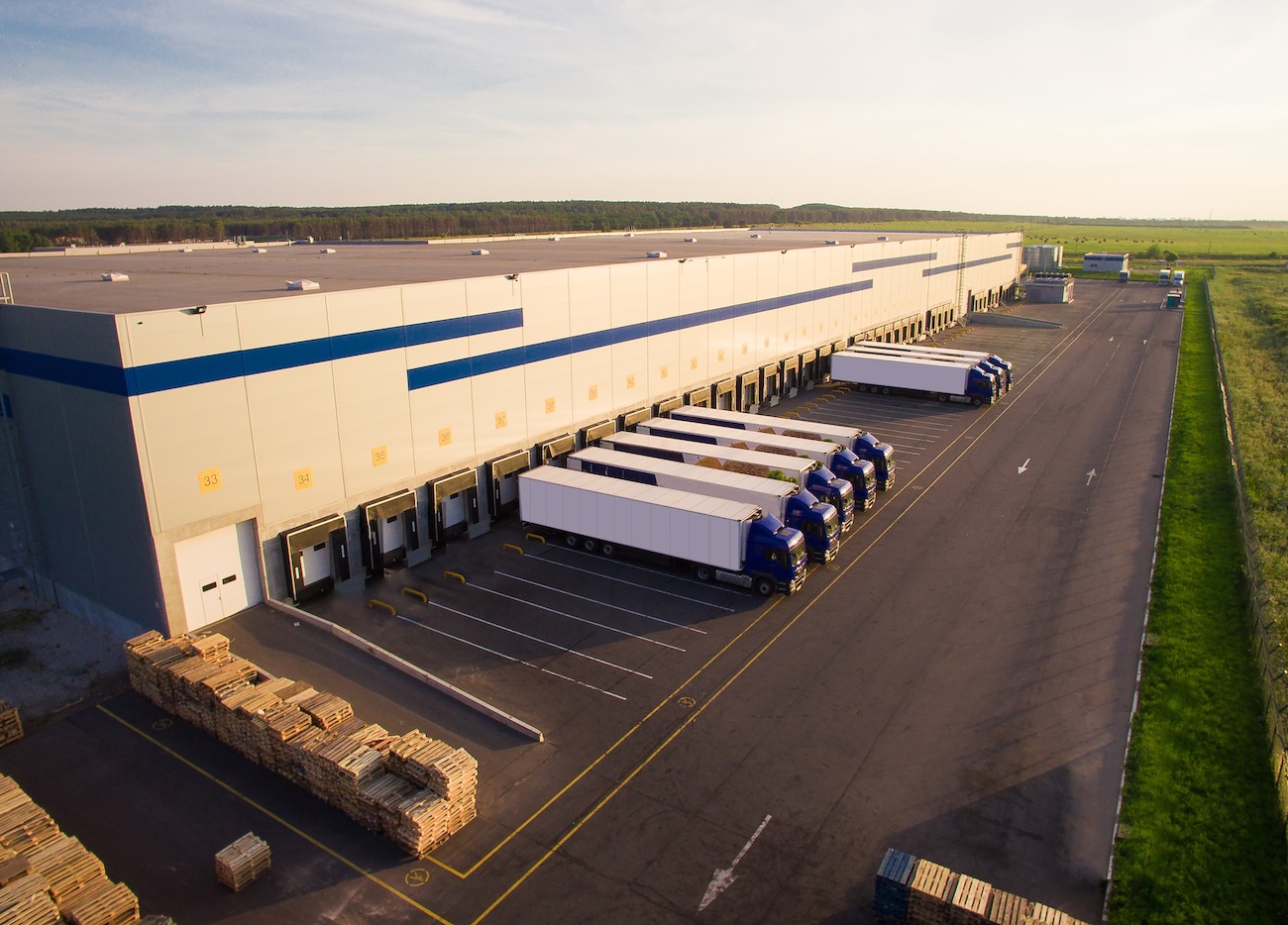
Our customer is a global producer of high-calcium and food-grade lime and limestone products, serving steel, water treatment, emissions, energy, and food industries across the US and UK. Their commercial teams manage long-standing accounts with complex budgets, orders, and product requirements — the kind of relationships where knowing the full picture of an account matters on every call.
Behind those relationships sits a complex technology landscape: IFS ERP, a laboratory information management system (LIMS), enterprise asset management, and SFTP-based data exchange. What the landscape didn’t include, until this engagement, was a CRM.
This was the company’s first Salesforce implementation — and they weren’t treating it as a bolt-on. They are positioning Salesforce Manufacturing Cloud and MuleSoft as foundational to their technology stack, with an integration and data architecture designed to carry everything that comes after.
The Challenge
Basic Account Questions Took Manual Effort to Answer
With no unified CRM, leadership and sales reps had no single place to see activity, leads, opportunities, orders, customer history, or forecasts. Answering a basic account question — what is this customer buying, how are they tracking against budget, what’s in the pipeline — required manual effort every time.
The data existed, but it lived in IFS. Account management, order tracking, and account-level budget, actuals, and estimates all sat in the ERP with no seamless integration to put them in front of the people managing the relationships.
Sample request management — a core step in how the company wins new business — ran through email and disconnected forms. There was no visibility into fulfillment status and no connection between a sample and the opportunity it was meant to advance.
Forecasting and territory-level performance reporting relied on ad hoc Power BI outputs. And underneath all of it sat the harder problem: the company’s integration and data strategy had yet to be defined. Any CRM built on top of that gap would inherit it.
The Solution
Build the CRM — and the Data Foundation Under It
ForeFront’s approach put architecture before configuration: Salesforce as the system of engagement, IFS ERP remaining the financial system of record, and MuleSoft carrying the data between them. Mid-stream, ForeFront consulted with the customer on their enterprise data and MDM strategy — where Salesforce fits in the broader landscape and how every future integration should be architected.
ForeFront designed, architected, and deployed Salesforce Manufacturing Cloud for Sales — the company’s first Salesforce implementation — covering the full front-end commercial process.
Key work included:
- Account, opportunity, and lead management: A single working environment for the commercial team, replacing the manual effort that used to sit behind every account question
- Custom Sample Management: Inbound requests captured via web form, routed through an automated approval-to-fulfillment workflow, with completed samples linked directly to Account and Opportunity records
- Drilldown account reporting: Account-level reporting built into Salesforce, replacing ad hoc Power BI outputs as the commercial reporting layer
With the CRM in place, ForeFront leveraged MuleSoft to build the integration backbone connecting IFS and Salesforce — establishing the data infrastructure the enterprise needs for its Account 360 vision. Because the integration follows the data strategy defined up front, each new connection strengthens the same foundation rather than adding another silo — with an expansion path to an MDM platform, Data Cloud, and Tableau as the foundation matures.
The Outcome
A Foundation Set for Everything That Comes Next
The company’s commercial process now runs in Salesforce, with the data architecture underneath it defined rather than deferred. Here’s a quick recap of everything we accomplished:
- A defined Account 360 vision. Budget, order history, and sales activity accessible on a single Salesforce page.
- An enterprise data and MDM strategy. Every future integration now follows a deliberate architecture instead of a one-off pattern.
- End-to-end sample tracking. Sample requests flow from web submission through lab fulfillment, linked to active pipeline.
- A clear growth path. Advanced account forecasting, Service Cloud, Data Cloud, and Agentforce — ready to deploy when the data foundation is ready to carry them.
For ForeFront, the engagement proved something beyond a single implementation win: the discipline to consult mid-stream and solve the harder data problem underneath the CRM first. That meant shaping the customer’s long-term technology strategy, defining the Account 360 architecture, and standing up the MuleSoft backbone the enterprise was missing. With the foundation set, ForeFront is positioned as the company’s long-term Salesforce partner for Advanced Forecasting, Service Cloud, and on-platform AI and analytics still to come.
The Results
What we achieved together
Unified
A defined Account 360 — budget, order history, and sales activity accessible on a single Salesforce page
Connected
A MuleSoft integration backbone linking IFS ERP and Salesforce — the data infrastructure every future integration will run on
Traceable
Sample requests tracked end-to-end, from web submission through lab fulfillment, linked directly to active pipeline